Topics Covered: Most families don’t go looking for an aging life care manager on a calm Tuesday. They call after something happens: a parent on the kitchen floor, a diagnosis no one expected, a hospital discharge that sent Mom home with a bag of pills and no plan, or a fight with a sibling about what to do next. Knowing when to hire a care manager is mostly about recognizing those trigger moments for what they are, signals that the situation has outgrown what one family can coordinate alone. We work with Triangle families at exactly these turning points, and the same handful of events show up again and again. The five takeaways below preview when professional coordination earns its place: You are not alone in facing this. A fall is the most common event that pushes a family from coping to calling. More than one in four adults age 65 and older falls each year, and fewer than half tell their doctor (CDC). The number that should change how you think about it: falling once doubles the chance of falling again. A fall is not the end of the story, it’s the opening line of the next chapter. Home feels safe because it’s familiar, but familiarity isn’t the same as safety. The dangerous stretch is the block of hours when no one is watching, and that’s exactly when a parent navigates the stairs, the shower, or a 2 a.m. trip to the bathroom alone. An aging life care manager looks at that gap directly. What a care manager does after a fall, that a worried phone call can’t:
We don’t believe home is automatically the safest place. It’s the most familiar place, and those are different things. The hours no one is watching are the hours that send people to the hospital. – the Aging Care Matters Care Team
A fall sends many parents to the emergency room, and that’s where the next, even higher-risk moment begins. Hospital discharge is the single most fragile handoff in elder care, and it’s a textbook moment to bring in a care manager. Among Medicare patients, about 17% are readmitted within 30 days (AHRQ), and the average readmission costs roughly $15,200. Many of those returns trace back to the same preventable failures: confusing discharge instructions, medications that conflict, follow-up appointments no one booked, and no one home to notice a parent sliding backward. This is the gap competitors gloss over with the word “transition.” The specifics matter. A parent leaves the hospital weaker than they went in, often on new prescriptions, and the family is handed a stapled packet and a “good luck.” That’s where coordination either happens or doesn’t. What hospital-to-home coordination actually covers: If your parent has been admitted more than once in a year, that pattern is itself the signal. We help families specifically with hospital-to-home transitions, because the difference between a smooth discharge and a revolving door is almost always coordination. And when the family member who would normally coordinate lives several states away, that difference gets even larger. Roughly 5 to 7 million Americans are long-distance caregivers, about 15% of all family caregivers, and they live an average of 450 miles from the parent they’re trying to help (National Alliance for Caregiving). Distance doesn’t reduce the worry; it concentrates it. Long-distance caregivers report higher emotional distress than caregivers who live nearby, and they spend the most out of pocket, around $12,000 a year on average, much of it on last-minute flights and crisis travel. The core problem with distance is information. You can’t see the unopened mail, the thinning frame, the bruise on the arm, or the food going bad in the fridge. You find out about problems after they’ve become emergencies. A care manager becomes your eyes and ears on the ground, which is the entire point of hiring one when you can’t be there.
From 450 miles away, you can’t tell the difference between a parent who’s managing and a parent who’s quietly declining. Someone has to be in the room. That’s the job. – the Aging Care Matters Care Team
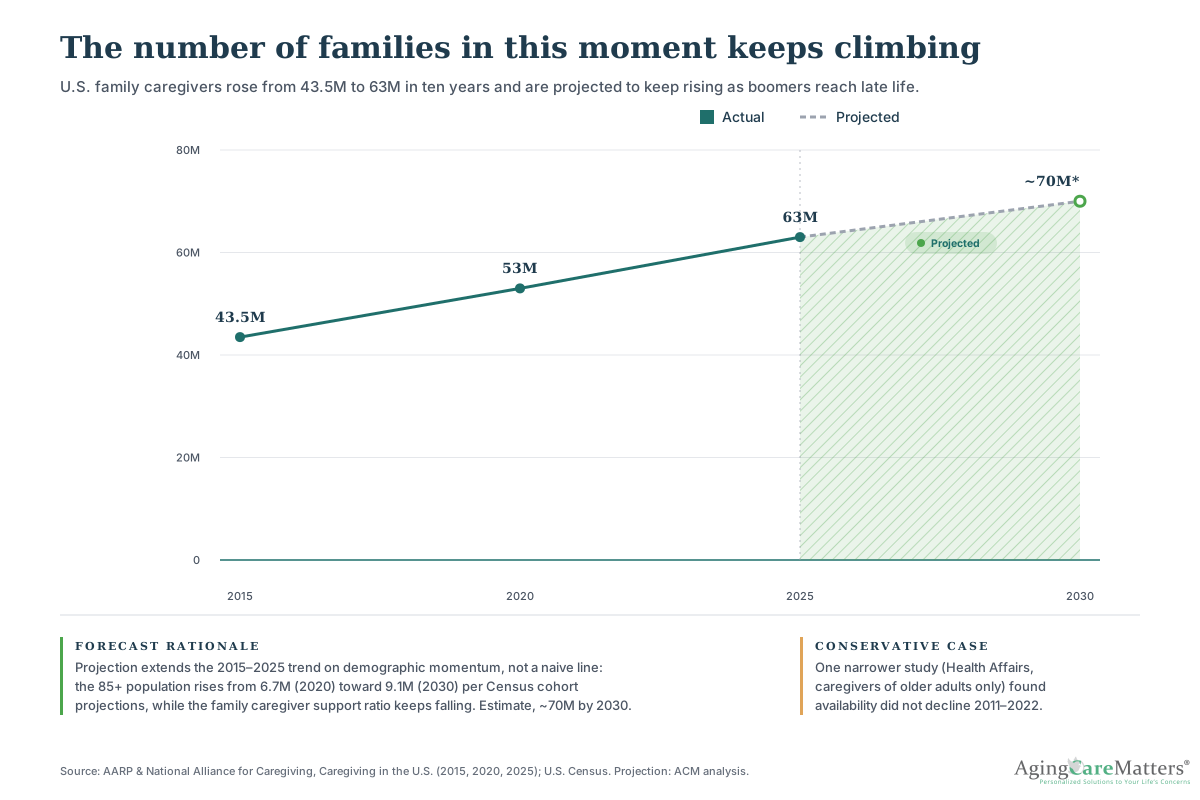
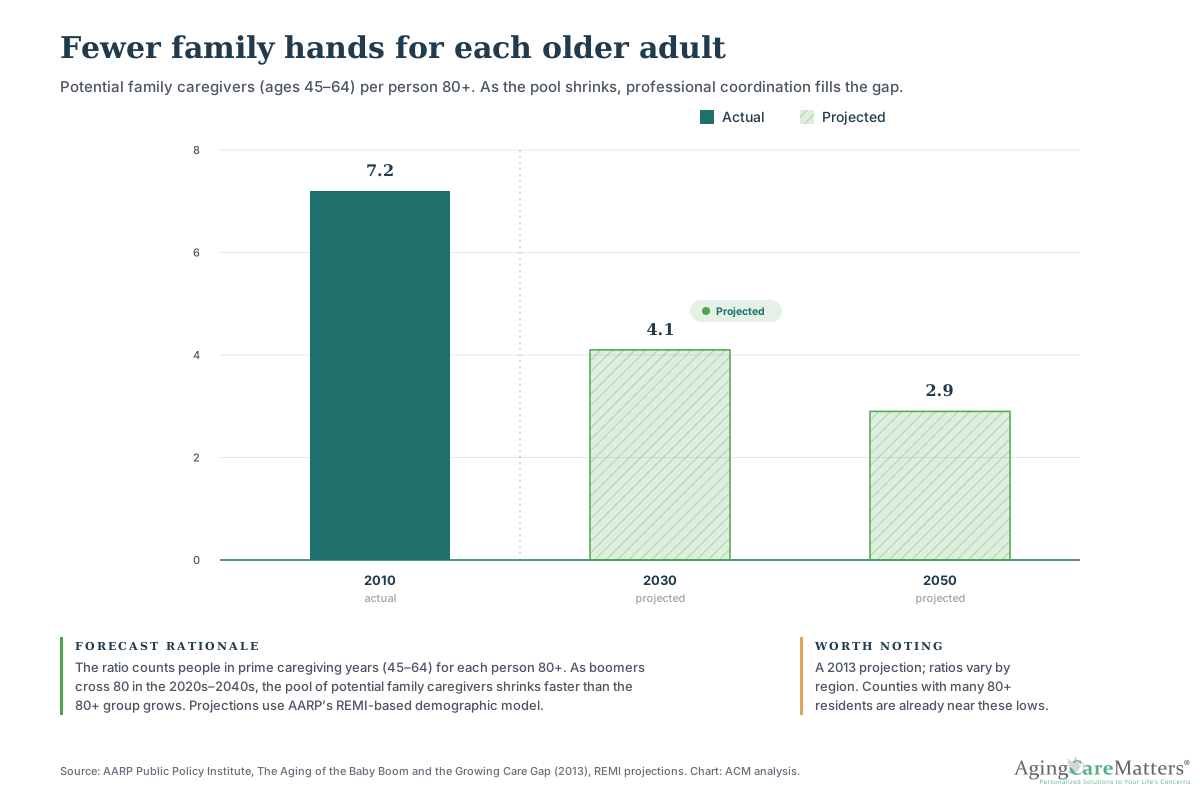
What a local care manager does for a distant family: We offer dedicated long-distance caregiver support for exactly this reason. Distance is hard enough when the family agrees on the plan. It’s far harder when they don’t. One of the most common reasons families stay stuck isn’t medical, it’s relational. One sibling thinks Dad is fine, another thinks he needs assisted living tomorrow, and a third hasn’t visited in a year but has the strongest opinions. Meanwhile, the parent’s needs don’t pause for the family to reach consensus. Sibling conflict is a care problem, because the cost of a stalemate is paid by the person in the middle. This is where a care manager does something a family member structurally cannot: act as a neutral professional. When the recommendation comes from an objective expert who has assessed the situation, it lands differently than the same words from the sister who “always thinks she’s in charge.” The plan becomes about the parent’s needs, not the family’s history. How professional coordination breaks a family stalemate: If conversations about your parent keep ending in conflict, that’s not a reason to wait until things calm down. It’s a reason to bring in someone whose job is to make the decision clear. Families also tell us they wish they’d done it sooner, because the case for acting early keeps getting stronger. There’s a structural reason the “we’ll figure it out ourselves” approach is getting tougher, and it has nothing to do with any one family. The number of potential family caregivers for each older adult is shrinking. AARP’s caregiver support ratio, the number of people aged 45 to 64 for every person 80 and older, stood at about 7 to 1 in 2010. It’s projected to fall to roughly 4 to 1 by 2030 and under 3 to 1 by 2050 as the baby boomers reach their highest-need years. What that means in plain terms: there are fewer family hands to go around, families are smaller and more spread out, and the adult children who would once have managed everything are often still working and raising their own kids. Nearly a third of today’s caregivers are part of the sandwich generation, caring for parents and children at once (AARP, 2025). Professional coordination isn’t a luxury layered on top of family care; it’s increasingly what makes family care survivable.
We believe the caregiver’s wellbeing is part of the care plan, not separate from it. Care that quietly destroys the family caring for it isn’t sustainable, and it isn’t good care. – the Aging Care Matters Care Team
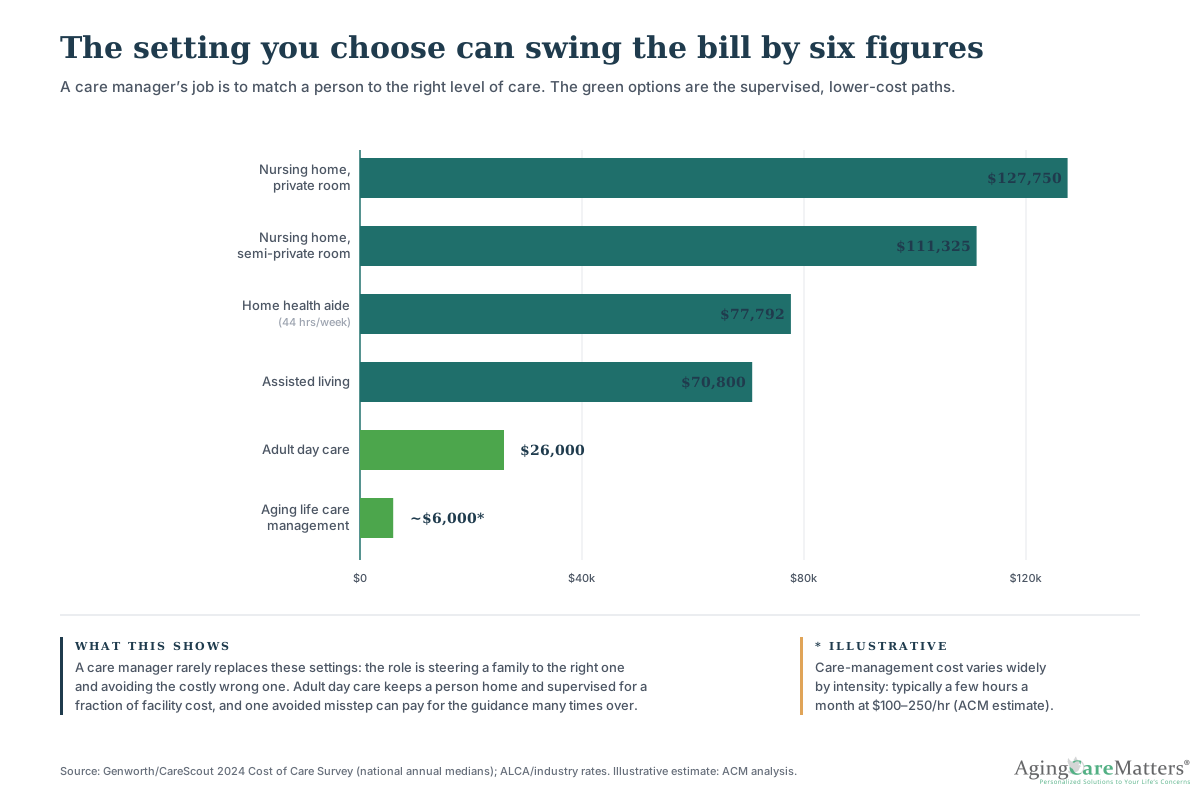
Acting early also costs less than reacting late. A care manager who helps you plan ahead, prevent a fall, smooth a discharge, or choose the right level of care usually saves far more than the fee, which brings up the question every family eventually asks: what does this actually cost? Aging life care managers typically charge $100 to $250 an hour, with an initial assessment often running $800 to $2,000 (multiple industry sources). Be clear-eyed about coverage: Medicare and Medicaid generally do not pay for private care management, though some long-term care insurance policies cover care coordination. For most families, it’s an out-of-pocket cost. That fee looks very different once you set it against what the wrong decision costs. A care manager rarely replaces a care setting; the job is to match your parent to the right one and steer you away from the expensive wrong one. Where coordination pays for itself: A quick, honest note: this article is general educational information, not medical, legal, or financial advice. Coverage rules and individual situations vary, so confirm specifics with the relevant professional, and our care managers are glad to help you sort through your own numbers. You don’t need every answer before you reach out. The starting point is almost always a care assessment, a structured evaluation of your parent’s health, safety, finances, and the family’s situation. From there you get a clear picture of what’s needed now and what’s coming, instead of guessing in the dark. If you’re still weighing whether the moment has arrived, our guide on when to hire a care manager walks through the decision in more detail. What’s the difference between an aging life care manager and a geriatric care manager? They’re the same role. “Aging life care manager” is the current term for what used to be called a geriatric care manager, typically a licensed nurse or social worker who assesses, plans, and coordinates care for an older adult. Does Medicare pay for a care manager? Generally no. Medicare and Medicaid rarely cover private care management. Some long-term care insurance policies cover care coordination, so it’s worth checking the specific policy. Isn’t hiring help a sign I’ve failed as a caregiver? No. Bringing in a professional is how families sustain care without burning out. It protects both the parent and the people caring for them, and it usually improves outcomes. How quickly can a care manager help in a crisis? Often within days. A care manager can step in during a hospital discharge or after a fall, run a rapid assessment, and arrange immediate support while a longer-term plan comes together. What’s the very first step? A care assessment. It gives you and your family one shared, objective picture to make decisions from. Our care team helps Triangle families recognize these moments and act on them with a clear plan. Led by Carla Payne, a Certified Care Manager and leader in the Aging Life Care Association, we bring more than 17 years of experience, plus three NC-licensed adult day centers in Wake Forest and Durham when a structured, supervised day is the right next step. Whether you’re managing a discharge, caregiving from a distance, or trying to get your siblings on the same page, we can assess the situation, build the plan, and coordinate the care so you can go back to being a daughter or son. If any of these trigger moments sound like your family right now, let’s talk about aging life care management. Call us at 919-525-6464 or schedule a free consultation, and we’ll help you figure out the next right step.
After a fall: why “they’re fine at home” stops being true
After a hospital stay: the discharge no one prepared you for
When you’re caregiving from a distance
When siblings disagree about what to do
Why waiting gets harder every year
What it costs, and why the math usually favors hiring
How to start
Frequently asked questions
How Aging Care Matters can help
