“My parent keeps falling. What do I do?” For many adult children, repeated falls are the moment caregiving shifts from “helping out occasionally” to realizing their parent may no longer be fully safe living independently without additional support. A single fall can change everything: Families often tell us the falls started gradually: Until suddenly they weren’t minor anymore. Falls are not a normal part of aging — they are a warning flag. According to the Centers for Disease Control and Prevention (CDC): Hip fractures are especially devastating for older adults. Research shows approximately 17%–25% of older adults who break a hip die within a year, often from complications related to immobility, hospitalization, infection, or decline afterward. Many families realize that fall risk was building long before the actual fall. Common warning signs include: Families should take repeated “almost falls” seriously. Near-falls are often the warning period before a major injury occurs. Many common medications increase fall risk – especially when multiple medications interact. High-risk medication categories include: Never stop medications abruptly without guidance from the prescribing provider. Vision changes are one of the most overlooked contributors to falls. Common vision-related fall risks include: Many older adults do not realize that bifocal or trifocal lenses can distort depth perception while walking downstairs. Some seniors benefit from single-vision distance glasses for stairs and walking Age-related muscle loss (sarcopenia) begins surprisingly early in adulthood but becomes much more significant in the 70s and beyond. Loss of muscle directly affects: Inactivity Accelerates Decline After: Many falls happen because the home environment no longer matches the person’s physical abilities. Common home hazards include: There is often a point at which falls stop being isolated incidents and become a pattern that signals the parent may no longer be safe alone for long periods. Common warning signs include: One of the biggest hidden risks is what happens after a fall: Adult day care can help reduce fall risk by providing: Many seniors become physically weaker more quickly when fear of falling causes them to stop moving. In-home support is often the better fit when fall risk has progressed to the point where the parent needs: This is especially true when: In-home caregiving typically averages: ~$35–$40+/hour Costs increase significantly when families require: Our Care Management team evaluates: Our Adult Day Centers provide: We help families coordinate: Our role is to help families reduce crisis-driven decision-making and create safer, more sustainable care plans. If you are feeling overwhelmed and unsure what steps to take next, we invite you to schedule a free 30-minute consultation. There is no pressure and no obligation – just an opportunity to talk through your concerns with an experienced aging care professional. Call us at 919-525-6464 or schedule a consultation to discuss: Yes. Even a single fall can be a warning sign of: Falls are not a normal part of aging and should always be taken seriously. Often it can be significantly reduced. Strength training, balance exercises, medication review, vision correction, home modifications, and proper supervision all help lower risk. The best device is the one the parent will consistently wear. Important features may include: Possibly — but the decision should ideally be made with a physical therapist. A poorly fitted or inappropriate device can actually increase fall risk. Fear after a fall is extremely common. Unfortunately, reduced activity often causes more weakness, which increases future fall risk further. Repeated falls, inability to get up independently, wandering, cognitive impairment, medication errors, or unsafe mobility often signal the need for increased supervision or support.
Fall Prevention: What Families Need to Know
Why Falls Matter
Recognizing Fall-Risk Signs in Your Parent
Fall Risk Factor 1: Medications
Risk Factor 2: Vision Changes
Bifocals & Trifocals on Stairs
Risk Factor 3: Strength & Balance Loss
Fall Risk Factor 4: Home Hazards
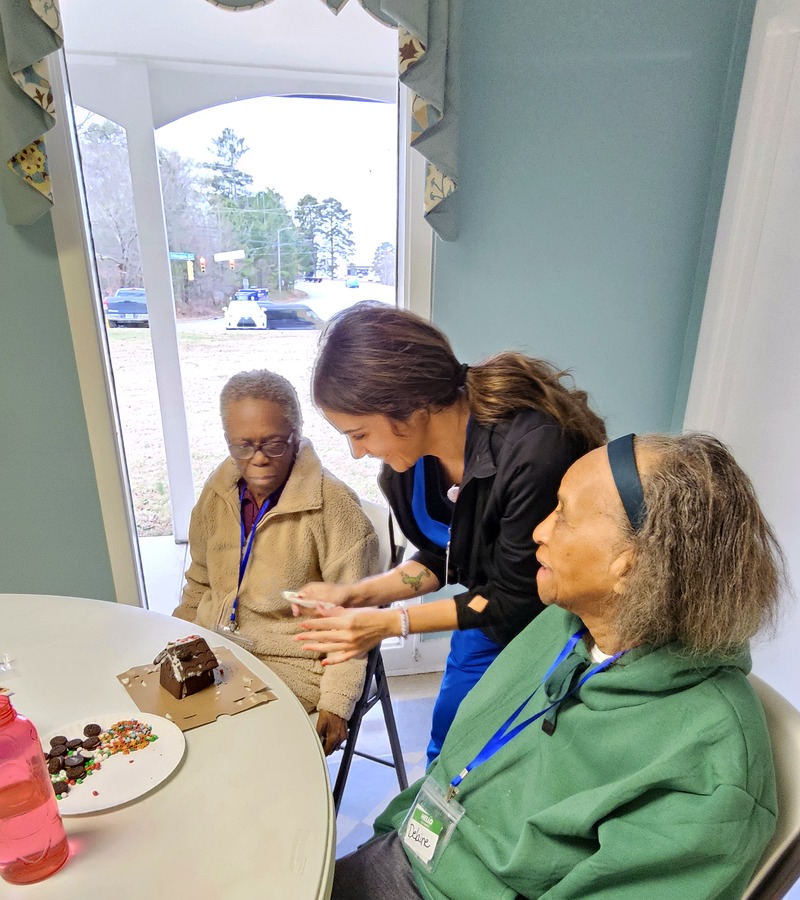
When Daytime Supervision and Adult Daycare Become Necessary
When In-Home Help Is the Right Answer
How Aging Care Matters Helps Triangle Families With Fall Risk
Initial Care Assessment & Home Safety Review
Adult Day Centers With Supervised Support
Care Management Coordination
A Note From Carla, Our Owner and Founder
Fall Prevention FAQ
My parent fell once – should I be worried?
Can fall risk be reversed?
What’s the best medical alert device?
Should my parent use a walker?
Why is my parent suddenly afraid of walking?
When is it no longer safe for my parent to live alone?
