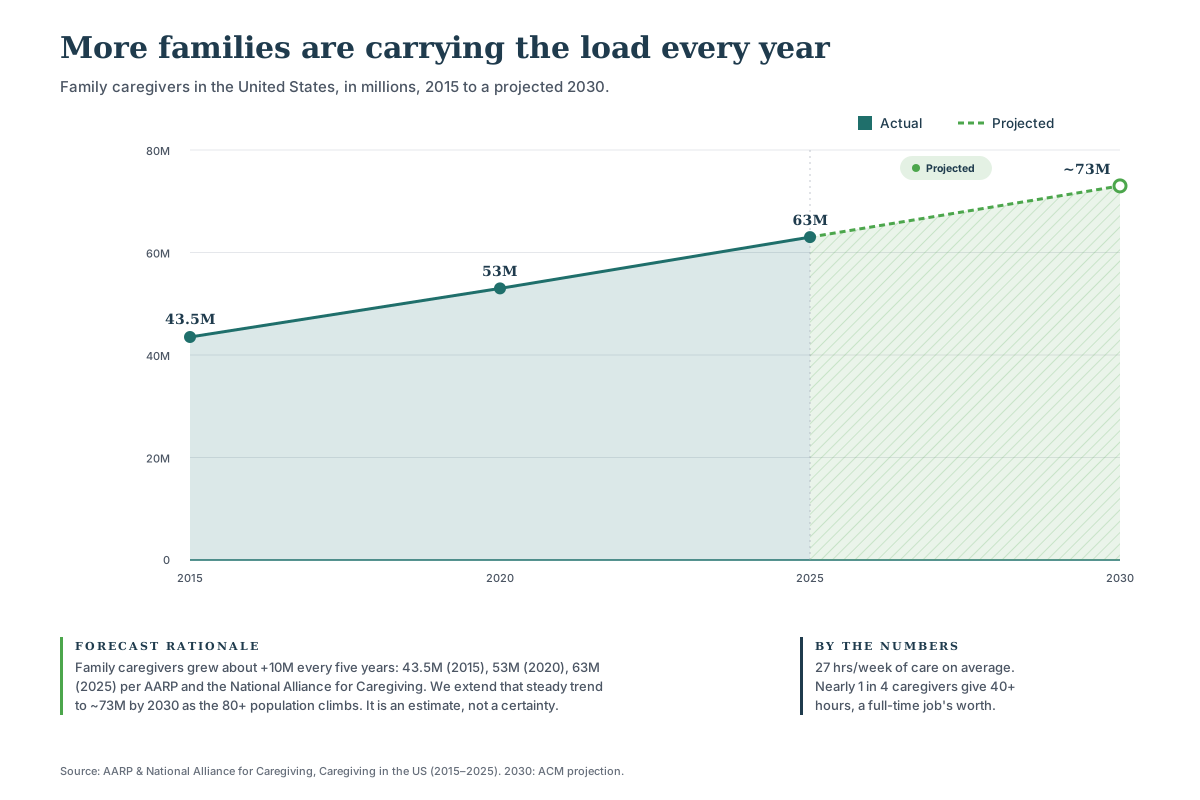
Topics Covered: An emergency respite care need almost never announces itself politely. A caregiver slips on the stairs, lands a sudden hospital stay, gets the flu, or simply reaches the moment where they cannot safely continue another hour. When that happens, the question is no longer “should we get help.” It is “who can keep Mom safe by this afternoon.” This is a playbook for that exact moment: what to do in the first hour, who to call, what to have ready, and what same-day options actually exist. We work these situations every week across Raleigh, Durham, Chapel Hill, and Wake Forest, and the families who come through them well are rarely the ones with the most resources. They are the ones who knew the steps. Six things to hold onto before you read further: We define a respite emergency simply: the primary caregiver can no longer provide care safely, right now, and the person they care for cannot be left alone. Notice what that definition centers. The trigger is usually something happening to the caregiver. That framing matters, because it changes what you protect first. Respite care exists to keep the caregiver standing, and a caregiver who burns out, gets injured, or lands in the hospital takes the whole care arrangement down with them. The strain is not rare or shameful. It is the norm. Family caregivers now provide an average of 27 hours of care a week, and nearly one in four give 40 or more hours, the equivalent of a full-time job layered on top of their actual lives. Roughly 39% report high emotional stress and one in five rate their own health as fair or poor. When you are already running at that level, it does not take much to tip from “managing” into “emergency.”
The hardest truth we tell families is that the care plan has two patients in it. If the caregiver goes down, everything goes down. Respite is not a reward you earn after you collapse. It is the thing that keeps the collapse from happening. – the Aging Care Matters Care Team
Recognizing the emergency for what it is points you toward the right first move, which is rarely the one panicked families reach for. So before you start dialing, know the order of your calls. The instinct in a crisis is to call everyone at once and hope someone answers. A better approach is a short, ordered sequence, because the goal of the first hour is coverage today plus a bridge to tomorrow. This is where professional care coordination earns its keep: an experienced care manager already knows which local programs have same-day capacity and can make three calls while you make one. Work the list in this order:
In the first hour, families don’t need the perfect provider. They need any safe pair of hands today and a plan for tomorrow. Speed beats perfection when someone genuinely cannot be left alone. – the Aging Care Matters Care Team
Every one of those calls goes faster when you are not assembling your loved one’s information from memory. That is what the go-sheet is for, and it is the single most useful thing you can prepare before you ever need it. Here is the paradox at the heart of emergency respite: the care you can get *today* depends almost entirely on the work you did *before* today. Providers cannot safely accept someone without certain information, and a caregiver in crisis is in no state to provide it. A single prepared page closes that gap. Think of it as the operational core of a broader family care plan, distilled down to what a stranger needs to keep your person safe for a day. Put these on one page and keep copies where anyone can grab them: With that page in hand, the providers you reach can give you a real answer instead of a callback. The next question becomes where your loved one can actually go. It is tempting in a pinch to think a few unsupervised hours at home will be fine. For someone with dementia, mobility limits, or fall risk, those are exactly the hours that produce the next crisis. Home is not automatically the safest place when the person who makes it safe is suddenly unavailable. The good news is that the out-of-home options are often the fastest to arrange and, for a daytime gap, the most protective. Your realistic same-day and overnight options: For the person receiving care, a day center is not a holding pen. It is company, routine, and stimulation at a moment when the alternative is isolation. That distinction matters, and so does the next one, which trips up nearly every family: what all of this costs and who actually pays. Most families we meet assume Medicare will cover a respite stay. It almost never does. Medicare pays for respite only under the hospice benefit, and only up to five consecutive days of inpatient care. Outside of hospice, emergency respite is generally out of pocket, which is why caregivers already spend roughly $7,200 a year of their own money on care. Knowing this before the crisis, rather than during it, is the difference between a calm phone call and a panicked one.
Most families assume Medicare will cover a respite stay. It almost never does. Learning that before the emergency, not during it, is the difference between a calm phone call and a frantic one. – the Aging Care Matters Care Team
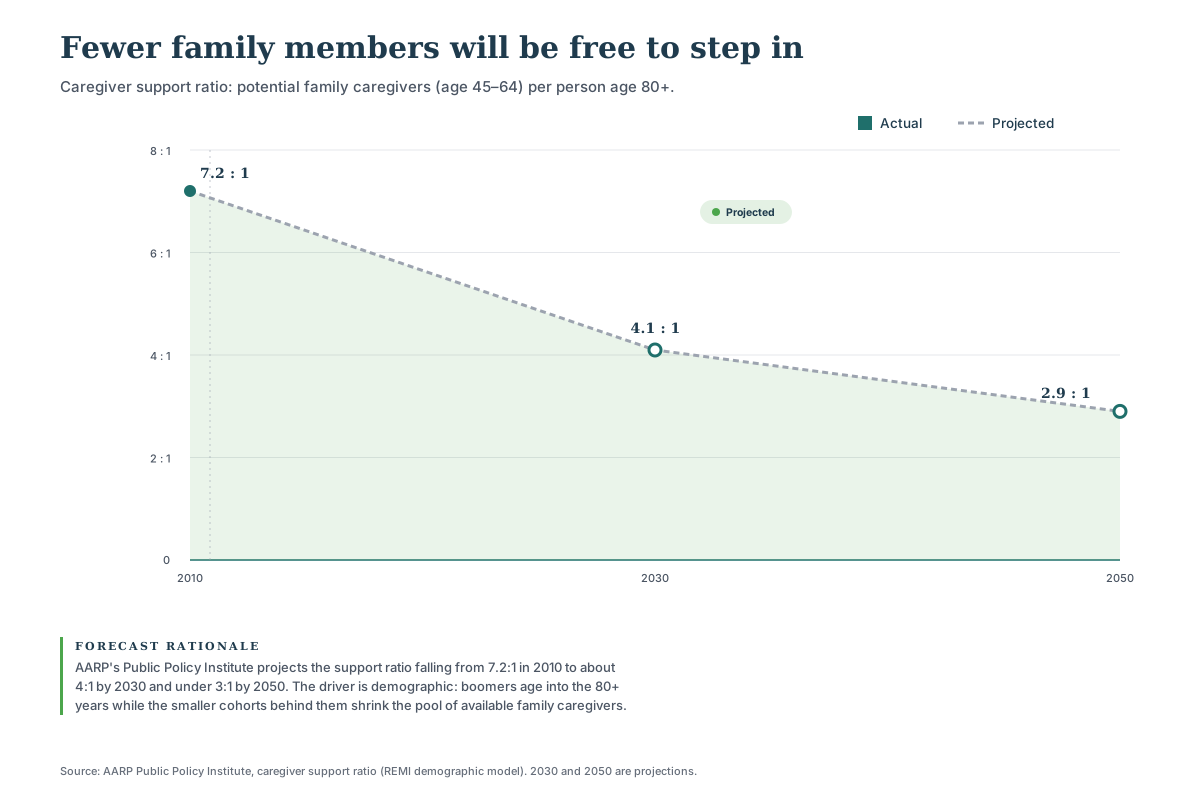
The funding paths that do exist, especially in North Carolina: This is general educational information, not medical, legal, or financial advice. Coverage rules change and depend on your situation, so confirm specifics with the relevant program or with our care managers before you rely on them. Sorting funding once, calmly, is also the bridge to the larger goal: making sure this emergency is your last unplanned one. An emergency is rarely a one-time event. It is usually the first signal that the current setup has run out of room. We say this plainly because false reassurance does not help anyone: if your loved one’s needs are rising, more hard moments are coming, and the structural picture makes that clearer every year. The pool of family members available to step in is shrinking. At the same time, the number of family caregivers keeps climbing, from 43.5 million in 2015 to 63 million in 2025, with no sign of slowing. More people are carrying heavier loads with fewer relatives to share them. That is the backdrop against which your single emergency sits, and it argues for a standing plan rather than a repeat scramble.
An emergency is rarely a one-time event. It is usually the first signal that the current setup has run out of room. The families who do well treat the scare as information, not just an interruption. – the Aging Care Matters Care Team
Turn the scare into a standing plan: Only 14% of families use respite even though far more say it would help. The families who do best are the ones who set it up before the emergency, not after. When you need help fast, you should not have to learn the entire system from scratch at the worst possible moment. Our care team knows which Triangle programs have same-day capacity, how the funding paths actually work in North Carolina, and how to turn a frightening day into a workable plan. We run three NC-licensed adult day centers across Raleigh, Durham, Chapel Hill, and Wake Forest, and our aging life care managers coordinate the moving pieces so you are not doing it alone. Whether you need coverage today or a standing plan so the next emergency never feels like one, we can help you take the next right step. If you need emergency respite care or want to put a plan in place before you do, call us at 919-525-6464 or reach out to our team. We will help you find safe coverage and a path forward. Generally no. Medicare covers respite only under the hospice benefit, for up to five consecutive days of inpatient care. Outside hospice, respite is typically paid out of pocket, though Medicaid waivers, the VA, and North Carolina’s Lifespan Respite voucher may help. A daytime adult day slot or an in-home aide can sometimes start within hours if your loved one is already registered or the provider has an emergency intake process. Without prior registration, expect anywhere from several hours to a day or two, which is exactly why a prepared go-sheet speeds everything up. Respite care is any temporary break for the caregiver, in or out of the home. Adult day care is one specific way to provide it: a supervised daytime program offering meals, activities, and health support. In a daytime emergency, an adult day center is often the fastest and most affordable form of respite. Possibly. The NC Lifespan Respite Program reimburses eligible caregivers up to $750 a year, Medicaid HCBS waivers often include emergency respite, and veterans may qualify through the VA. Most of these require setup in advance, so apply before a crisis if you can. Dialing 2-1-1 connects you to local options by county. Diagnoses and key history, a full medication list with timing, behaviors and triggers, daily routine and mobility needs, legal documents including any DNR, and emergency contacts with the preferred hospital. One page that a stranger could use to keep your loved one safe for a day.
What a respite emergency really is (and who it’s about)
Your first hour: who to call and in what order
The go-sheet: the one page that makes same-day care possible
Where your loved one can safely go today
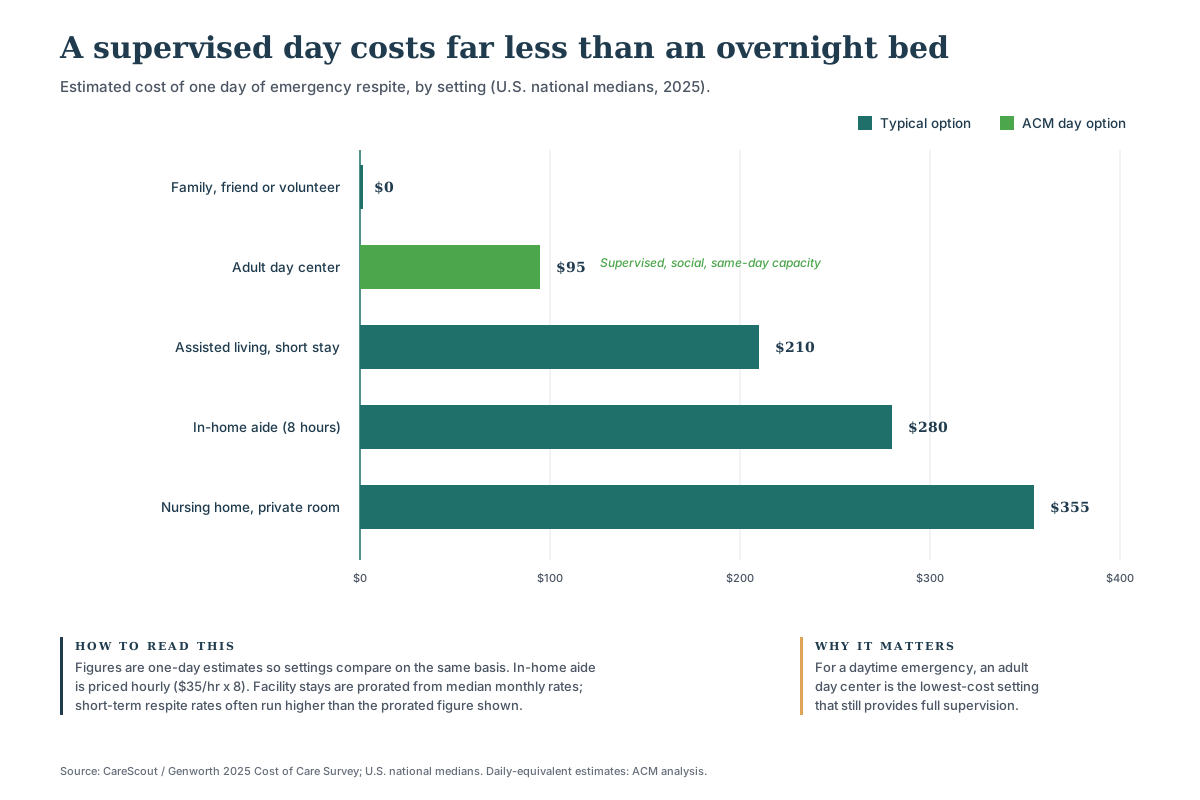
What emergency respite costs, and who actually pays
From scramble to standing plan: preventing the next crisis
How Aging Care Matters helps
Frequently asked questions
Does Medicare pay for emergency respite care?
How quickly can respite care be arranged?
What is the difference between respite care and adult day care?
Can I get help paying for emergency respite in North Carolina?
What should go on an emergency care go-sheet?
