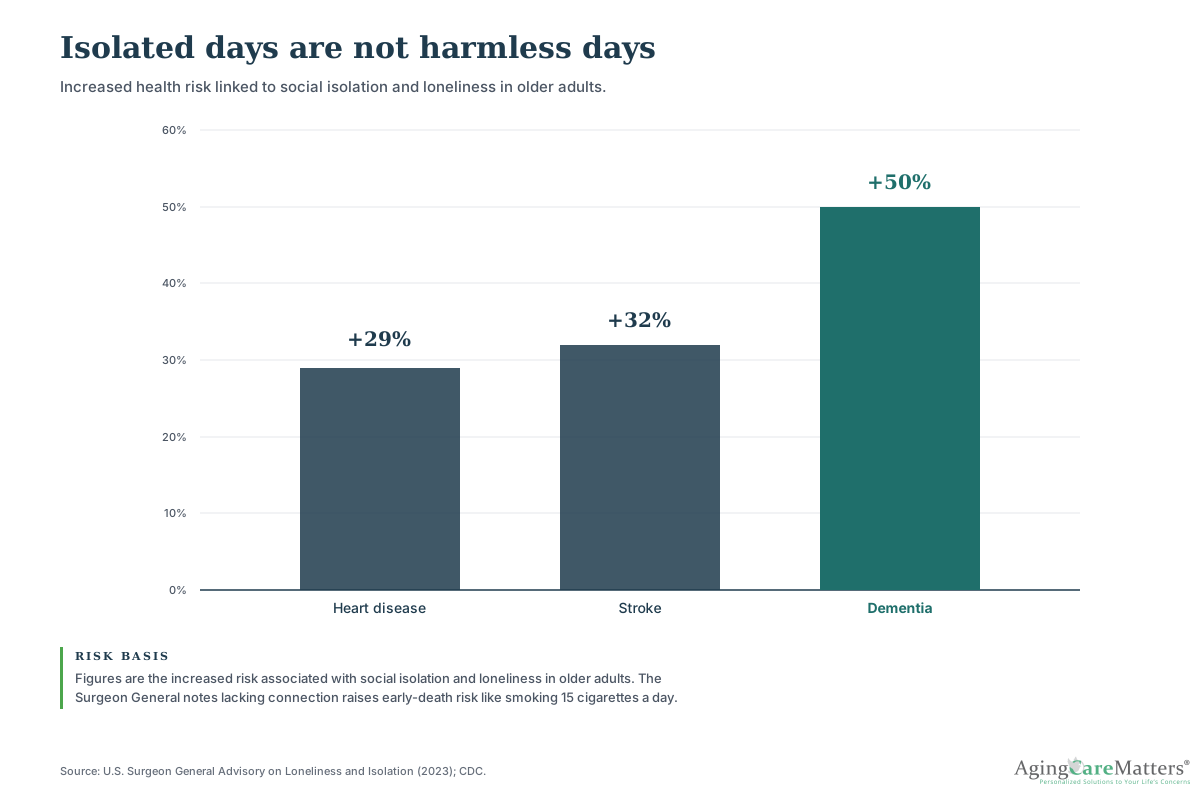
Topics Covered: Key takeaways The first signs are easy to explain away. The television runs from morning to night. A once-busy gardener or card player has stopped doing the things they loved. Calls get shorter. When the only face your parent sees most days is yours, loneliness stops being a mood and starts being a health risk. About one in four adults over 65 is socially isolated, and the consequences are not small. We treat adult day care as social care first, because connection is what slows the decline that isolation speeds up. The U.S. Surgeon General has compared the toll of poor social connections to smoking 15 cigarettes a day. That is the case for taking the quiet days seriously. Watch for these patterns of isolation and withdrawal: A day program answers this directly with peers, routine, and a reason to get dressed in the morning. For a parent with memory loss, a secured memory care day program offers that same engagement in a setting built for safety. What looks like a personality change is often just too many empty hours.
“We have watched a parent the family described as ‘withdrawn and difficult’ come back to life within weeks of joining a group. They were not declining as fast as everyone feared. They were lonely.” “Home is safest” feels true, but it usually means safe during the hours someone is there. The unsupervised stretches are where the risk lives. Falls are the leading cause of injury death for adults over 65, and about one in four older adults falls each year, sending roughly three million to the emergency room. Most of those falls happen at home, often in the afternoon when a parent is alone. A parent who is unsteady or gets confused later in the day faces those risks during exactly the hours a family member is at work. Signs the unsupervised hours have become unsafe: A day program turns the most dangerous hours into supervised ones, with trained staff, a secure space, and activity that keeps a restless mind occupied. If unsteadiness is the main worry, our team can also help with fall prevention as part of a broader plan. Safety at home is not a fixed fact. It changes with the time of day and who is in the room.
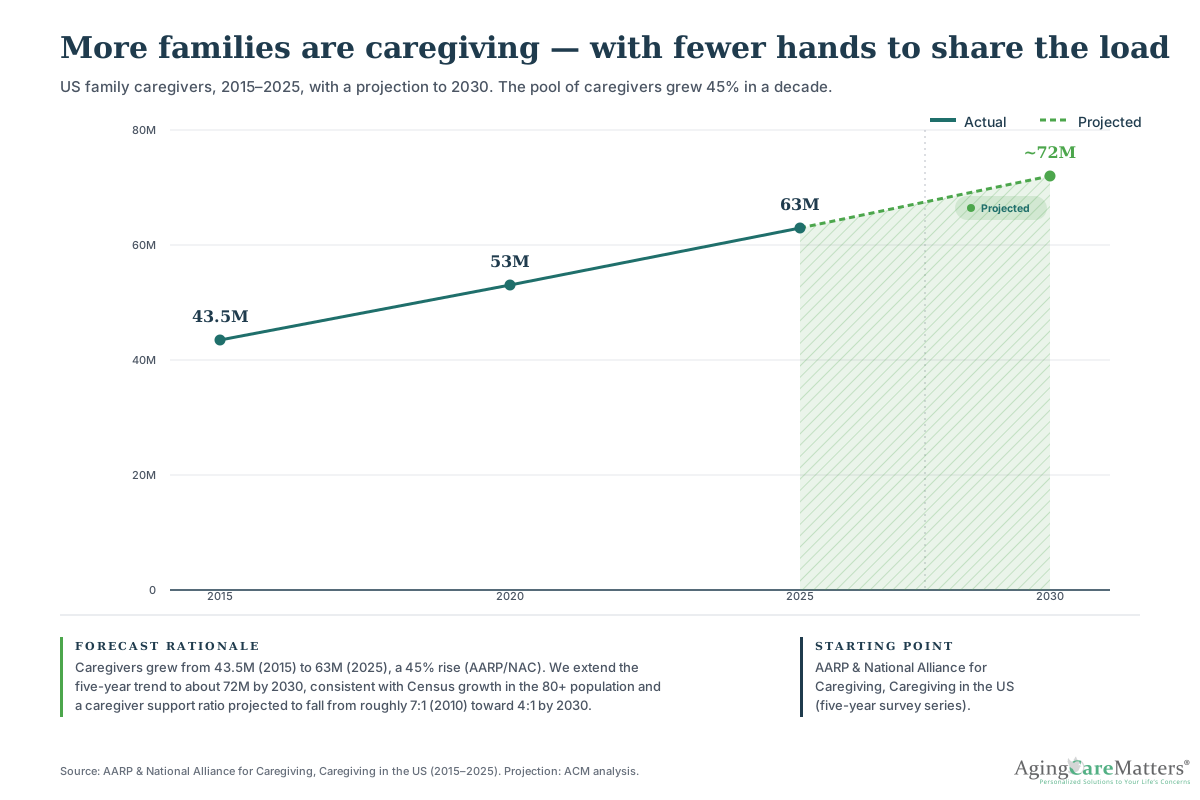
“Families rarely call us after a quiet year. They call after the fall. The goal of a day program is to make that call unnecessary.” Some of the clearest signs sit in the kitchen and the medicine cabinet. A pill organizer still full at the end of the week. A refrigerator with spoiled food or almost nothing in it. Clothes that have grown loose. It is tempting to read each one as a single bad day. We encourage families to read them as a pattern instead, because that is usually what they are. Missed medications can quietly worsen a heart or blood pressure condition, and skipped meals speed up the weakness that leads to falls. The signals worth taking seriously: Honesty serves families better than reassurance here. These are not signs that your parent is careless. They are signs that managing a day alone has gotten harder than it was a year ago. Adult day centers build in supervised meals, snacks, and medication monitoring, and staff who notice changes early often catch a problem before it becomes a hospital visit. Naming the trajectory plainly is what lets you get ahead of it. Not every sign shows up in your parent. Some show up in you. The pool of family caregivers in the United States has grown to 63 million, a 45% jump in a decade, and the load each one carries has grown with it. Caregivers now provide an average of 27 hours of care a week, and nearly one in four gives 40 or more. Almost two-thirds report high emotional stress, and one in five say their own health has slipped because of the role. Your exhaustion is not a personal failing. It is a sign in its own right, and it belongs in the care plan. The number of caregivers keeps climbing while the number of family members available to share the work keeps shrinking, putting more weight on fewer shoulders every year. That is a structural problem, not a willpower problem, and it is why so many families hit burnout before they reach for help. Signs you have hit your own limit: A day program gives you back the hours to work, rest, or simply breathe, and a regular respite break protects the person you are caring for too, because care that burns out the caregiver does not last. If you recognize yourself here, our guide to preventing caregiver burnout is a practical place to start.
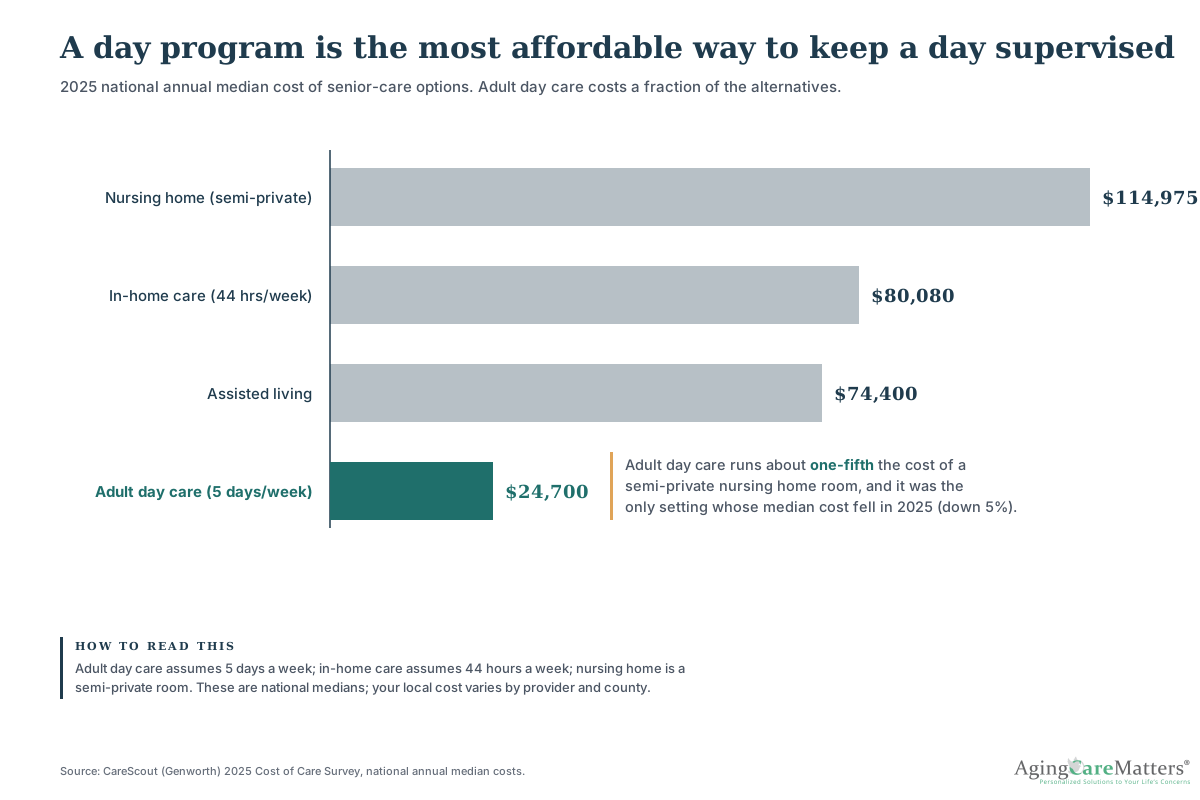
“A worn-out caregiver is not a sustainable care plan. When we protect the caregiver, we are protecting two people, not one.” Maybe the most common sign of all is the quiet decision to wait. Most families hold off until a crisis forces the issue, often because they feel they should be able to handle it alone. The trouble is that crisis-driven decisions are the most expensive and the most limiting. A fall or a hospital stay can push a family into a rushed, costly move into residential care, when a structured day a year earlier might have prevented it. Adult day services are shown to delay placement into long-term care facilities, so early support is not just kinder, it usually costs less and keeps a parent home longer. Why acting early beats waiting: A short, honest care assessment is often the fastest way to see clearly where things stand and what a sensible next step looks like. The best time to explore a day program is before the crisis, not after it. For many families, the real hesitation behind every other sign is money. Here the news is better than most people expect. Adult day care is the most affordable supervised care option by a wide margin, and in 2025 it was the only setting whose national median cost actually fell. At roughly one-fifth the cost of a semi-private nursing home room, a day program often delivers more of what a parent actually needs, which is company and supervision, for far less. It also tends to cost less than the hours of in-home care it can replace, a trade-off we walk families through when we compare adult day care with in-home care. The funding picture is where North Carolina families lose the most money to bad information. A few points worth knowing: We help families sort out payment options so the decision is based on real numbers, not guesses. This article is general educational information, not medical, legal, or financial advice, and eligibility rules change, so it is worth confirming your specific situation with our care managers or a qualified professional.
“The most expensive care is the care families buy in a panic. Planning a few months ahead almost always costs less and protects more.” If several of these signs sound familiar, you are not behind, and you are not failing. You are seeing clearly, which is the hardest part. Our team runs three NC-licensed adult day centers across the Triangle, in Wake Forest and Durham West, and we pair them with aging life care management so families have a professional in their corner. We can show you what a day actually looks like, talk through how to introduce the idea to a parent who is hesitant, and help you weigh whether a few days a week is the right next step. The simplest place to start is to see a center for yourself. Call us at 919-525-6464 or reach out to our team to book a no-pressure tour and ask every question on your mind about adult day care. There is no commitment, just a clearer picture of what is possible. How do I know if my parent is ready for adult day care? What is the difference between adult day care and in-home care? Does Medicare or Medicaid pay for adult day care in North Carolina? How much does adult day care cost in 2025? Will my parent be upset about going to a day center?
“Fine at home” is one of the most comforting things a family can tell itself, and one of the easiest to get wrong. A parent can be safe in the broad sense and still spend most of the week alone, eating less, moving less, and quietly losing ground. The signs you need adult day care rarely arrive as one dramatic emergency. They show up as a pattern of slow, ordinary days that add up. Below are seven signs that the support at home has stopped being enough, and what a structured day program changes for each one.
Sign 1 and 2: Your parent goes whole days without real company
– the Aging Care Matters Care Team
Sign 3: The hours no one is watching are the ones that worry you
– the Aging Care Matters Care Team
Sign 4: Meals get skipped and medications get missed
Sign 5: You’re the one running on empty
– the Aging Care Matters Care Team
Sign 6: You keep saying you’ll deal with it when it gets worse
How much does adult day care cost, and who pays for it?
– the Aging Care Matters Care Team
How Aging Care Matters can help
Frequently asked questions
If your parent spends most days alone, has had safety scares during unsupervised hours, is skipping meals or medications, or if you as the caregiver are burning out, those are the clearest signs. You do not need all of them. A pattern of two or three is usually enough to start a conversation.
In-home care brings a caregiver to the house for set hours, usually one-to-one. Adult day care brings your parent to a center for the day, where they get supervision, meals, and group activity with peers. Day care typically costs less and adds the social engagement that one-to-one home care often cannot.
Original Medicare does not cover ongoing adult day care. North Carolina Medicaid may cover it through the CAP/DA waiver for residents who meet the eligibility and level-of-care rules. Veterans benefits and long-term care insurance are other common funding paths.
The 2025 national median is about $24,700 a year for five days a week, or roughly $95 a day. That is far below assisted living, in-home care, or nursing home care, and local rates vary by provider and county.
Many are hesitant at first and then look forward to it once they find their group. A gradual introduction, and framing it around an activity they enjoy rather than “day care,” makes the first visits far easier.
