Caring for a parent with dementia is its own job. What begins as helping with small things — reminders, bills, appointments, repeated questions — often slowly grows into supervision, crisis management, medical coordination, emotional support, and constant decision-making. Most adult children are completely unprepared for how much of their own life caregiving eventually consumes. Dementia changes the relationship between parent and child. Adult children suddenly find themselves managing medications, monitoring safety, handling finances, navigating difficult conversations, making medical decisions, and carrying the emotional weight of watching someone they love gradually change over time. Many caregivers are trying to balance all of this while also working, parenting, managing households, and attempting to hold their own lives together. This page is designed to be a practical playbook for families navigating dementia caregiving — covering: Many families describe a gradual realization that “something isn’t right.” Early dementia symptoms are often subtle at first and may be mistaken for normal aging, stress, grief, or simple forgetfulness. Common early signs adult children notice include: One of the hardest parts of dementia caregiving is that the role keeps changing. Families are constantly adapting to new losses, new safety concerns, and increasing levels of dependence over time. In-home dementia care is often the best fit when families want support brought into the home rather than moving the person into a group setting. Some individuals with dementia become highly anxious, agitated, or confused in unfamiliar environments. Remaining at home may reduce distress and preserve comfort. Late-Stage Dementia Makes Group Settings Overwhelming As dementia progresses, some individuals are less able to tolerate noise, activity, transitions, and group interaction. The Family Needs One-on-One or 24/7 Coverage In-home care can provide personalized supervision, overnight care, weekend support, and full 24/7 coverage if needed. Adult day care is often one of the most effective and sustainable dementia-care solutions for both participants and caregivers. Many individuals still benefit greatly from routine activities, socialization, cognitive stimulation, and structured engagement, especially earlier in the dementia journey. Isolation often worsens dementia symptoms. Adult day programs provide conversation, activities, music and movement, routine, and community interaction. Many families notice improved mood and engagement after regular attendance begins. If your family is navigating dementia and feeling overwhelmed, a free 30-minute consultation can help clarify next steps and available support options. Our professional care management team helps families navigate dementia diagnoses, coordinate medical care, attend appointments, create care plans, manage crises, facilitate difficult family conversations, and plan for future care needs. We help families move from reactive crisis management to more structured, sustainable care management. Aging Care Matters provides dementia-informed Adult Day Care in: Families often contact us during hospitalizations, unsafe situations at home, caregiver burnout, placement decisions, sudden cognitive decline, and family conflict. Our role is to help stabilize the situation, identify options, and guide families through the next steps with professional support. If you are feeling overwhelmed and unsure what steps to take next, we invite you to schedule a free 30-minute consultation. There is no pressure and no obligation – just an opportunity to talk through your concerns with an experienced aging care professional. Call us at 919-525-6464 or schedule a consultation to discuss: Occasional forgetfulness can be part of aging. Dementia typically involves progressive cognitive decline that interferes with daily functioning, safety, judgment, communication, or independence. Start with the parent’s primary care physician, who may refer to neurology, geriatrics, or a memory disorders clinic for cognitive evaluation and testing. Progression varies greatly depending on the type of dementia, overall health, age, and medical conditions. Some individuals live many years after diagnosis while gradually requiring increasing support. Sometimes this works well. Sometimes it creates significant caregiver strain, relationship stress, and burnout. Families should realistically evaluate supervision needs, home setup, caregiver capacity, finances, and long-term sustainability before making this decision. Driving conversations are emotionally difficult because they involve independence and identity. Families often need support from physicians, care managers, or neutral professionals to navigate this safely and compassionately. Most families combine: Adult day care often works best during the early-to-mid stages of dementia, when individuals still benefit from routine, socialization, structure, and cognitive engagement. Memory care may become necessary when:
Caring for a Parent With Dementia
Learn More
Contact Our Team

Caring for a Parent With Dementia


Recognizing the Signs Your Parent May Have Dementia
The 7 Stages of Dementia — and What They Mean for You as the Caregiver
Stage
What the Parent May Look Like
What the Caregiver Should Be Doing
What To Plan For Next
Stage 1: No Observable Impairment
No obvious symptoms
Begin conversations about legal and financial planning if concerns exist
Establish baseline medical care
Stage 2: Very Mild Cognitive Changes
Forgetfulness, misplaced items, missed words
Monitor changes, encourage medical evaluation
Put POA and advance directives in place early
Stage 3: Mild Cognitive Decline
Repeating questions, missed bills, getting lost, work or task difficulties
Increase oversight, simplify routines, begin discussing support
Driving concerns, medication management, safety planning
Stage 4: Moderate Decline
Clear memory impairment, financial mistakes, difficulty with complex tasks
Increase supervision, involve family/support systems
In-home help, adult day care, caregiver respite
Stage 5: Moderately Severe Decline
Needs help choosing clothing, confusion about time/place, increased dependence
Provide hands-on assistance, reduce overwhelm & stimulation
Full-time supervision planning
Stage 6: Severe Decline
Significant memory loss, personality changes, wandering, incontinence, behavior changes
Focus on safety, routine, caregiver support, burnout prevention
Memory care or higher-level support may become necessary
Stage 7: Very Severe Decline
Limited verbal ability, total dependence, physical decline
Focus on comfort, dignity, skin care, feeding, medical support
Hospice and end-of-life planning
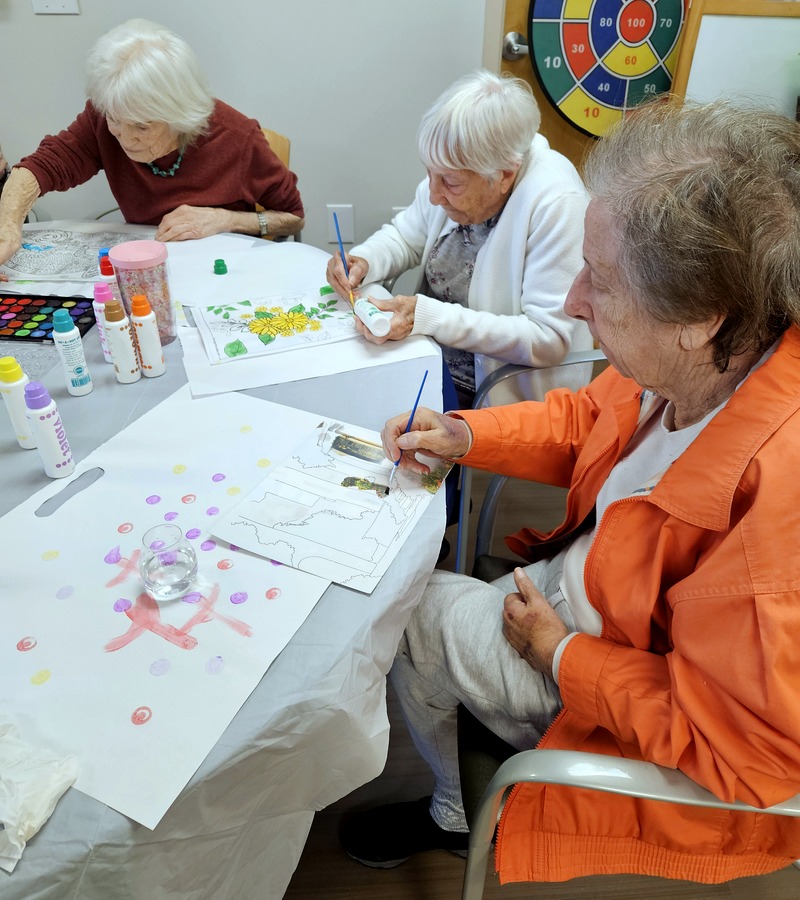
When In-Home Care for Dementia Is the Right Answer
In-Home Care Often Works Best When:
The Parent Strongly Resists Leaving Home
When Adult Day Care for Dementia Is the Right Answer
Adult Day Care Often Works Best When:
The Parent Is in Early-to-Mid Dementia Stages
Social Interaction Improves Mood & Functioning


How Aging Care Matters Helps Triangle Families With Dementia
Care Management
Adult Day Centers
Crisis Support

A Note From Carla, Our Owner and Founder
Dementia Care FAQ
Is my parent’s memory loss normal aging or dementia?
How do I get a dementia diagnosis?
How long do people live with dementia?
Should I move my parent into my home?
How do I take away the car keys?
How do families afford dementia care?
When should we consider adult day care?
When is it time for memory care?
